|
|
|
|
|
|
|
|
|
|
|
St. Bartholomew's Church, Armley Restoration & Improvements, 2000 to 2004 |
|
|
|
|
|
|
|
|
|
|
|
|
|
|
|
|
|
|
|
|
|
|
|
|
|
|
|
|
|
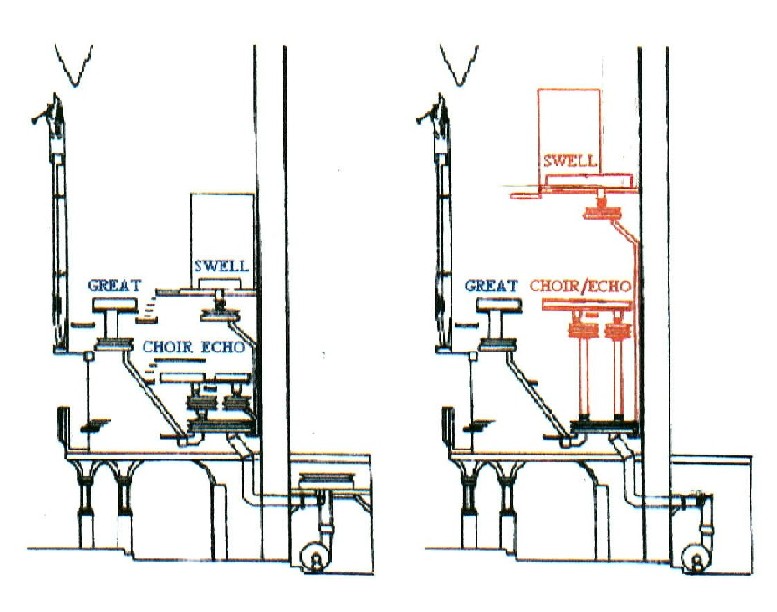
Former layout, suspected to be as at Meanwood and in St. Peter.s, Harrogate . For detailed plans of the layout of the organ and Pipes, drawn between 1973 and 1978, see Organ Plans |
|
The new layout using the full height of the North Transept.
|
|
|
|
|
|
|
|
|
|
|
|
|
|
|
|
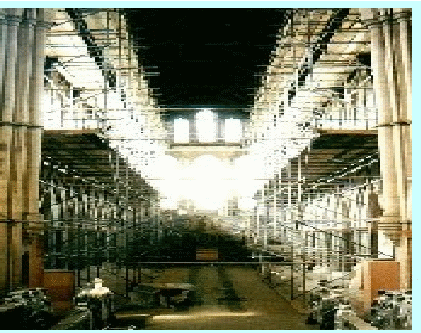
As a result, in the late-September of 2000, the Church was rapidly being cocooned in scaffolding, and as from June 2002, the Organ was silenced for about 18 months as the specialist contractors, Harrison & Harrison, took it to bits for cleaning, restoration and re-ordering. Fittingly, Prof Graham Barber gave a short closing recital to visitors to the Leeds Heritage Open Weekend on Sunday afternoon, 16th September, 2000. He concluded with a requested performance of Bach’s Toccata and Fugue in D Minor, which, despite a storming presentation, managed to adequately show up the faults and problems that lay within. |
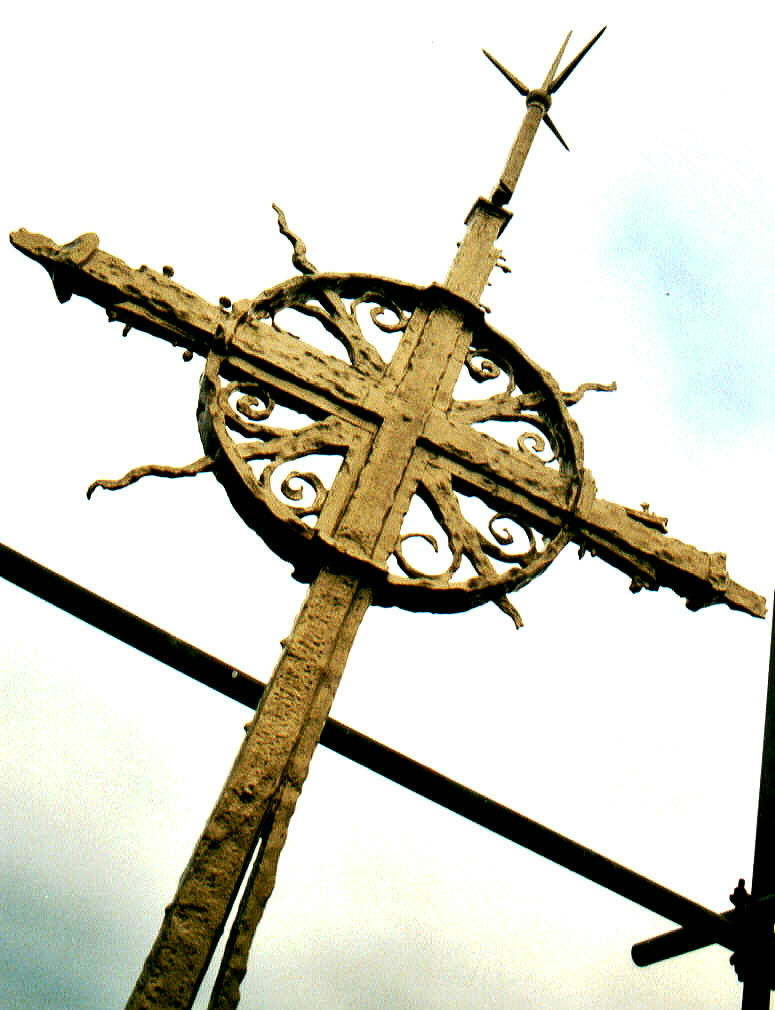
Throughout
the Autumn of 2000, the Church gradually disappeared under a very
impressive cloak of scaffolding, stretching right up to the cross
at the peak of the spire. (So impressive in fact, that it
inspired a souvenir postcard to add to our currently available
collection.) |
|
|
|
|
|
|
|
All external work was completed by July, 2001. Every roof has been stripped and re-slated, and the upper reaches of the Church and Tower stonework have been re-pointed. A mass of lightning conductors have replaced the old pair of copper strips, and new safety facilities have been built in to all accessible parts of the roofs. Delays to the reduction of the scaffolding were in part due to trying to find a relatively calm spell of weather to complete work on the spire cross. This was managed during January, and the gold leafing has proved a spectacular sight in the low sun. |
|
|
|
|
|
|
|
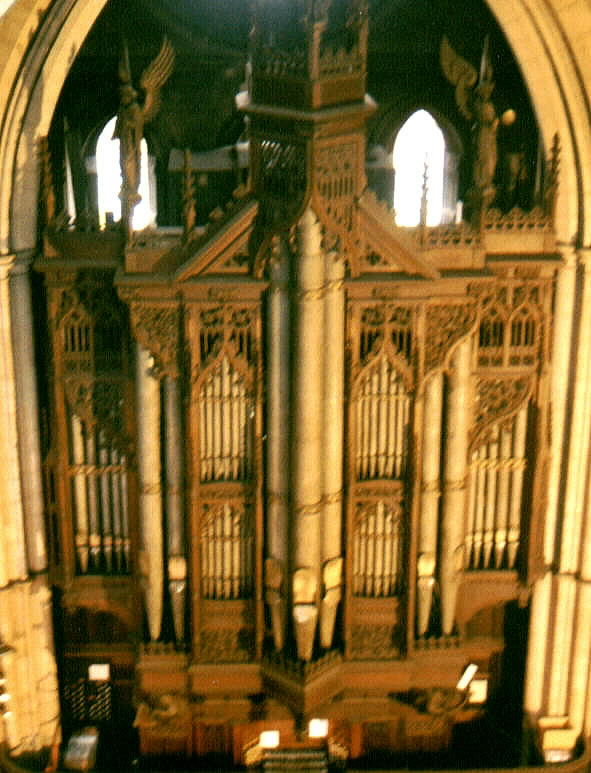
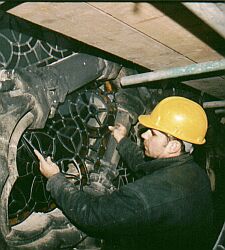
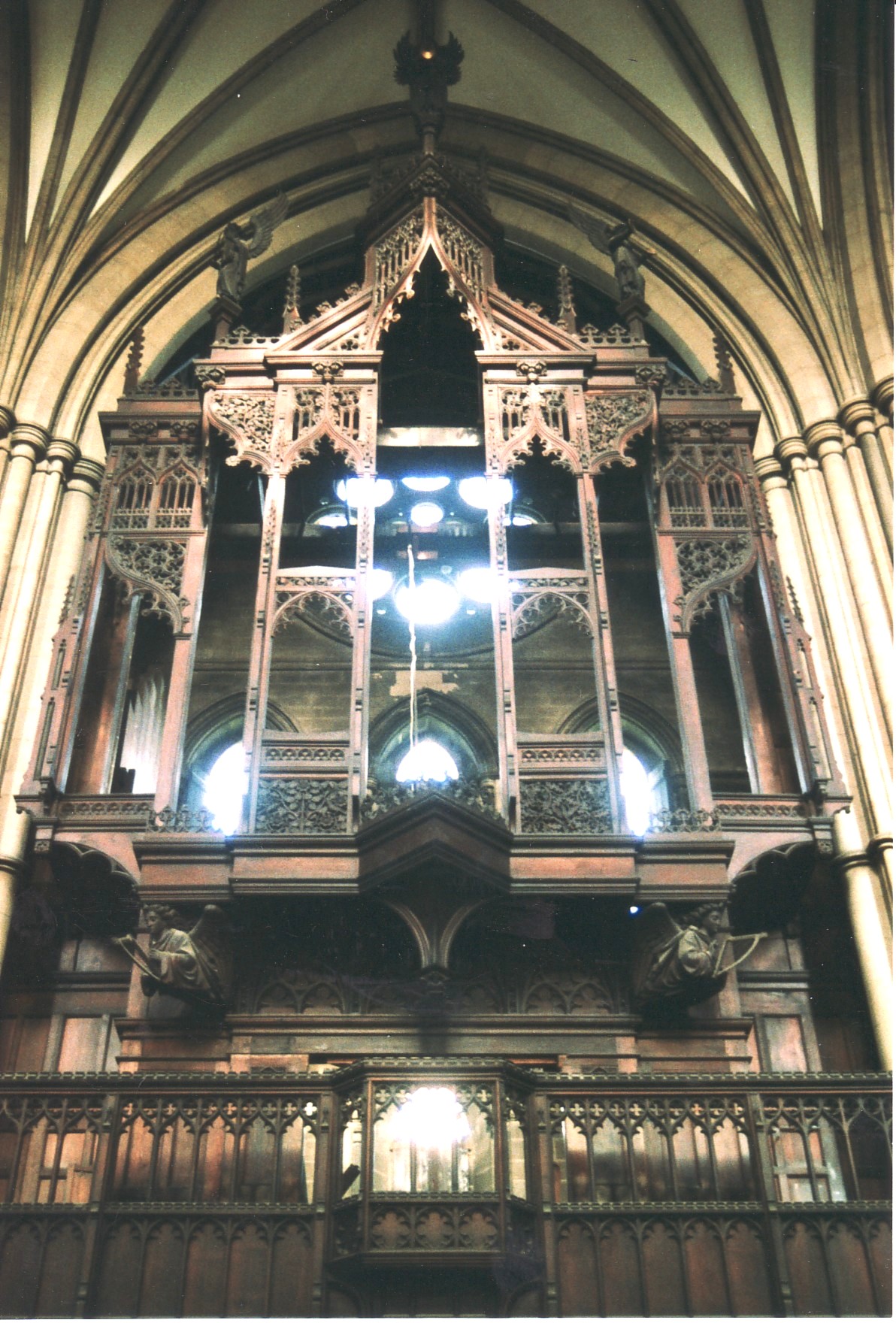
All the stained glass windows have been repaired and restored. These had been vandalised over the years, starting with air gun pellets, small stones and golf balls, graduating upwards to footballs! Working from old photographs and considerable experience, what we thought to be the impossible restoration of the stained glass was carried out to a remarkable standard. This work was done either on site or at the specialist studios of Kyme's in Middlesborough, who have also |
provided and fixed
new protective guards. As a by-product of this work, the windows
in the North Transept have been opened up for the first time in
living memory, allowing daylight into the Organ chamber. One
interesting sideline of the work was the opportunity to take a
picture of the Organ from the unique position of the high rose
window of the South Transept, whilst one of the repaired sections
of glass was being installed. |
|
|
|
|
|
|
|
|
|
|
|
|
|
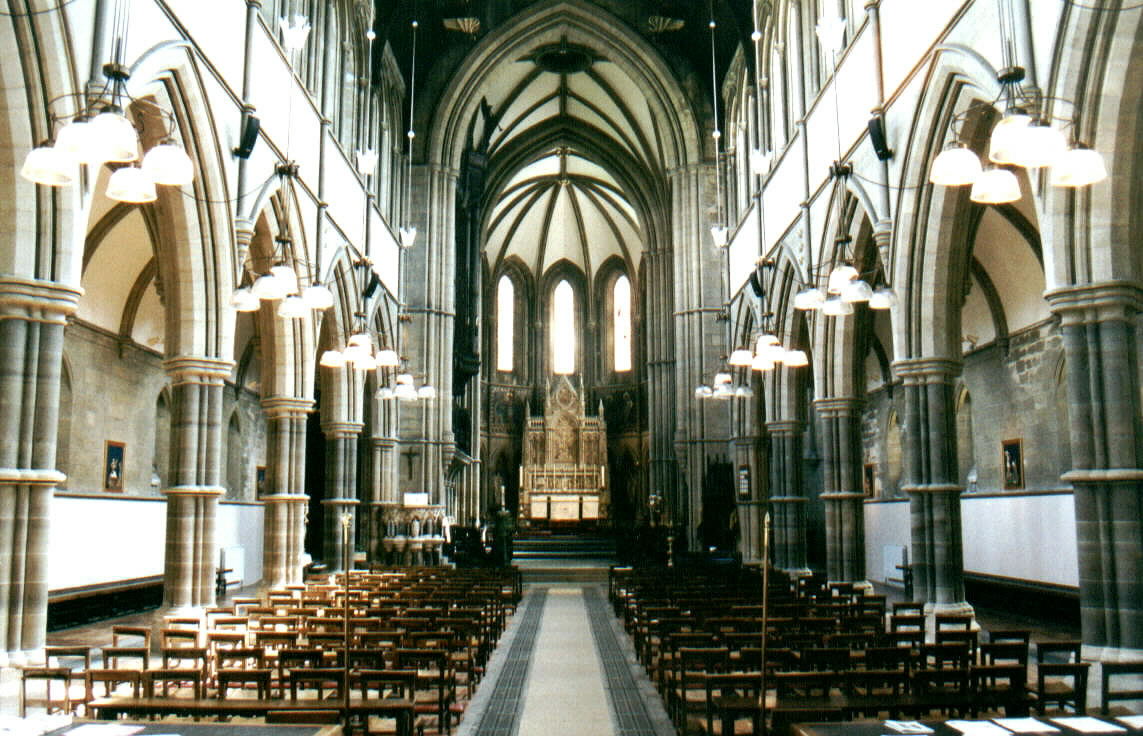
Major work on the interior of the church, including the new lighting and heating and the provision of better wheelchair access, was completed in April, 2002 . Two sections of scaffolding gave access to the roof angel hammer beams for gilding, and the Chancel and Sanctuary ceilings for repair, painting and part gilding. Suspension columns for the new lighting were fixed in this period. Meanwhile, at floor level, the new heating system was installed, and broken and |
cracked
concrete flooring was replaced in Yorkshire stone.
Extensive masonry work, by G. Payne Masonry of Ripon, was carried
out, with the accommodation of wheelchairs in mind. Steps
were removed as floors were levelled, and both internal and
external ramps were provided. A new public address system
was installed, with CD playing facilities. For the bulk of
2001 all main church services were transferred to the Church
Hall. |
|
|
|
|
|
|
|
The new lighting, designed by a Bishop Aukland consultancy, is the improvement most commented on by the all-year round visitor (though most people turning up in Winter remark on the warmth of the church). This lighting hangs above the congregation and shines upwards as well as down. This causes glass angels and disco-type glass bowls to sparkle, and it brings out the beauty of the roof-work. It has since one a prize for excellence. Comments about the heating are forthcoming since the extravagant design has produced a system in which the church is comfortable within 30 minutes of switching on, added to the fact that a minimum of 10°C is maintained at all times. |
|
|
|
|
|
|
|
|
|
|
|
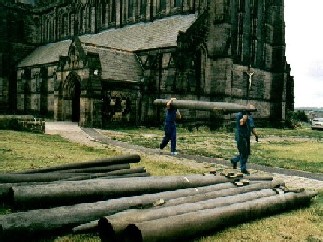
At last, in May, 2002, work began on the organ. Harrison and Harrison of Durham were on site over a period of five weeks, taking out the whole of the interior. Most of it was transported to their shops, leaving only the lower end of the 32-foot Pedal rank in situ, along with a variety of pipes which will require little more than cleaning. |
|
|
|
|
|
|
|
|
|
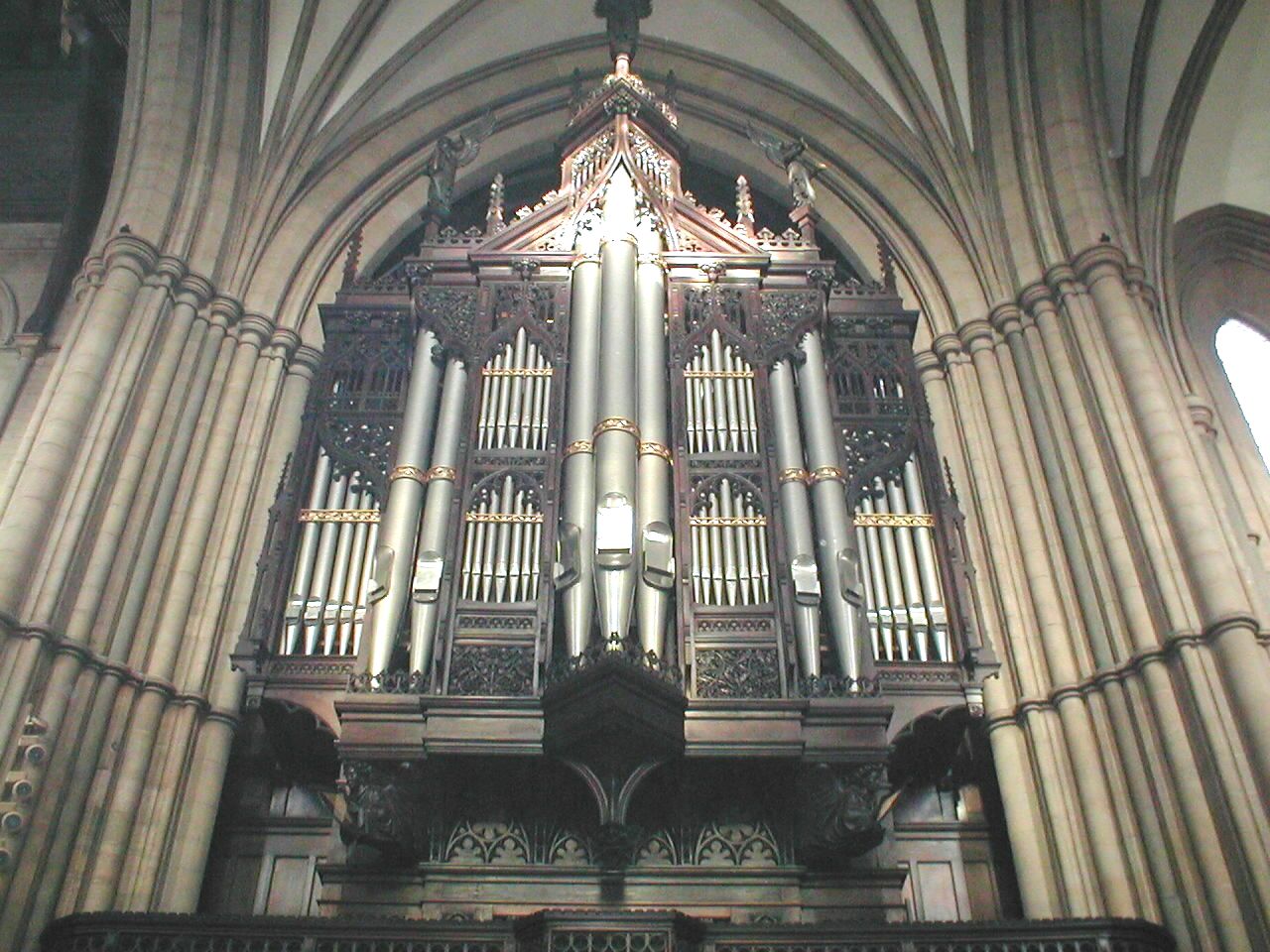
From June, 2003 several contractors were used to provide electric points and lighting, a water supply and humidifier. Now the interior of the chamber is illuminated to provide excellent facilities for tuning and maintenance, and power points are strategically placed (except for the later discovered omission of one to fit a small heater in to warm up the organist!). Harrison & Harrison’s contractors again erected scaffolding, this time to the full height of the organ. This enabled them to clean and gently polish the whole case, and the uppermost angels were part gilded by local labour. From July onwards the organ frame was reconstructed and the organ returned to the new layout. |
|
|
|
|
|
|
|
|
In
early January 2004 the organ was ready for the final pipe
installations and for final voicing and tuning. This was a long
and laborious operation and was only partly completed when the
organ was heard again for the first time on Sunday, 22nd
February.
It was prematurely rededicated, along with the church, by the
Archbishop of York on 3rd March. |
|
|
|
|
|